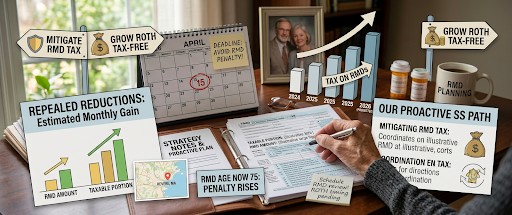
Missing an RMD is one of the most common — and most correctable — retirement account mistakes. The SECURE 2.0 Act made the rules significantly more forgiving. Here is the current penalty structure and how to correct a missed distribution.
2026 Penalty Structure
| Situation | Penalty |
|---|---|
| Missed RMD (general) | 25% of the amount you should have withdrawn |
| Corrected within 2-year window | Reduced to 10% |
| Corrected promptly with reasonable cause | IRS may waive entirely |
Before SECURE 2.0 (2023), the penalty was 50% — one of the highest in the tax code. The reduction to 25% (and 10% for prompt correction) significantly improved the situation for seniors who make honest mistakes.
How to Correct a Missed RMD
- Take the missed distribution immediately. Withdraw the amount you should have taken — or should have taken in a prior year — as soon as you discover the mistake.
- Calculate the correct amount. Use the RMD Calculator to verify the exact amount owed for the missed year.
- File IRS Form 5329. Attach it to your federal tax return for the year the RMD was missed. On Form 5329, you can request a penalty waiver by writing "RC" (Reasonable Cause) and a brief explanation in the appropriate box.
- Attach a letter of explanation. Briefly explain why the RMD was missed (confusion about rules, illness, oversight) and confirm you have now taken the distribution.
The IRS grants penalty waivers in the vast majority of first-time cases where the distribution is promptly corrected and a reasonable explanation is provided. If this is your first missed RMD, the odds of a full waiver are good — especially with guidance from a tax professional.
Calculate Your RMD and Stay On Track
Avoid penalties entirely by knowing your required amount before your deadline.