When do I actually need to enroll in Medicare?
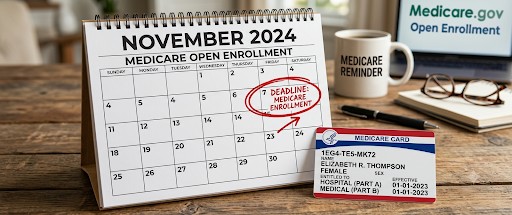
Medicare enrollment has strict timing rules — and missing them can mean permanent premium penalties that follow you for life. Here are the windows you need to know.
Initial Enrollment Period (IEP)
Your IEP is a 7-month window centered on your 65th birthday:
- 3 months before the month you turn 65
- The month you turn 65
- 3 months after the month you turn 65
Enrolling in Part B during the first 3 months of your IEP ensures coverage starts on time. Enrolling in the 4 months after your birthday month may delay coverage.
Late enrollment penalties are permanent. If you miss your IEP for Part B without a qualifying reason, you'll pay a 10% premium surcharge for every full 12-month period you went without coverage. This surcharge applies for as long as you have Part B — which is often decades.
Special Enrollment Period (SEP)
If you or your spouse had employer health coverage when you turned 65, you can delay Medicare without penalty and enroll during a Special Enrollment Period when that coverage ends. Your SEP lasts 8 months after coverage ends.
Important: COBRA coverage does not qualify as employer coverage for SEP purposes. Once COBRA begins, your SEP clock may already be running.
Annual Enrollment Period (AEP)
October 15 – December 7 each year. During AEP, you can:
- Switch between Original Medicare and Medicare Advantage
- Change your Medicare Advantage or Part D plan
- Add, drop, or switch a Part D prescription drug plan
General Enrollment Period (GEP)
January 1 – March 31 each year. For seniors who missed their IEP and don't qualify for a SEP, the GEP is the fallback enrollment window. Coverage begins July 1. Late enrollment penalties still apply.
Medicare Advantage Open Enrollment
January 1 – March 31 each year. If you're already in a Medicare Advantage plan, you can switch to another Advantage plan or return to Original Medicare once during this period.
Review Your Medicare Options Before the Next Enrollment Period
Check if you qualify for savings programs before you lock in a plan for the year.