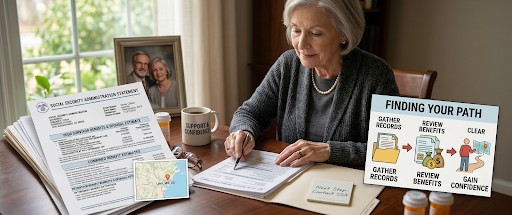
Survivor benefits are one of the most valuable but least understood parts of Social Security. They can provide up to 100% of your deceased spouse's benefit — and the claiming decisions you make can significantly affect your income for decades.
Who Qualifies for Survivor Benefits
- Widow or widower — as early as age 60 (or 50 if disabled)
- Divorced spouse — if married for at least 10 years
- Dependent children under 18 (or 19 if still in high school)
- Disabled children of any age
- A parent who was dependent on the deceased for at least half of their support
How Much You Can Receive
Survivor benefits can be up to 100% of your deceased spouse's benefit — including any delayed retirement credits they earned by waiting past their FRA.
This is why the higher earner in a couple often benefits from delaying to 70 — their larger benefit becomes the survivor benefit for whichever spouse lives longer.
Important Survivor Benefit Rules
- You can claim survivor benefits as early as 60 — but claiming before your own FRA permanently reduces the benefit
- If you are receiving your own Social Security, you will generally receive the higher of the two (not both combined)
- Remarrying before age 60 may affect eligibility — but remarrying at 60 or later does not
- If you haven't claimed your own benefit yet, you can claim survivor benefits first, then switch to your own benefit at 70 if it would be higher
The switch strategy: Widows and widowers can claim survivor benefits first, then switch to their own (larger) benefit at 70 — or claim their own benefit first, then switch to the survivor benefit if the deceased spouse's benefit is higher. This flexibility is unique to survivors.
Understand Your Survivor Benefit Options
Model your benefit income under different scenarios to make the most informed decision.